Mole Negro Oaxaqueño
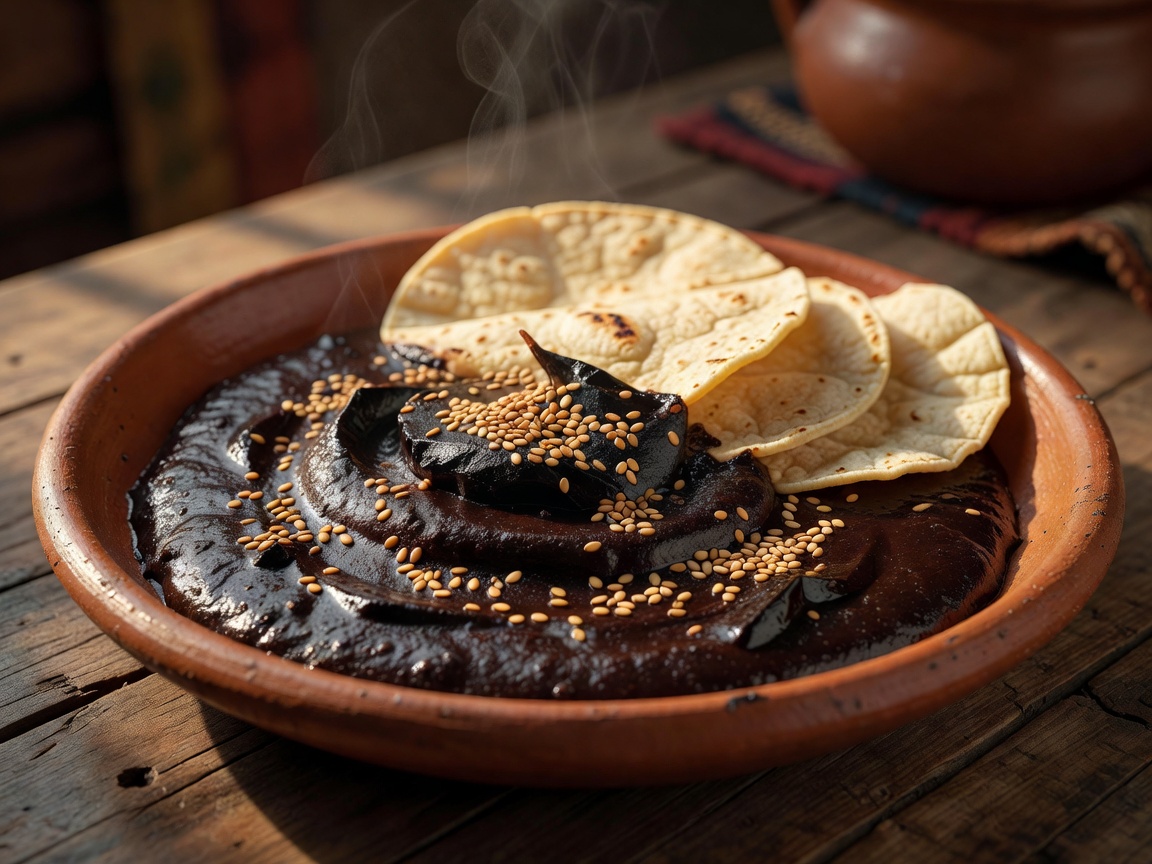
The King of Moles: An intricate balance of six charred chiles, dark chocolate, plantains, spices, and masa ground on basalt stone.
Historical Lineage & Cultural Significance
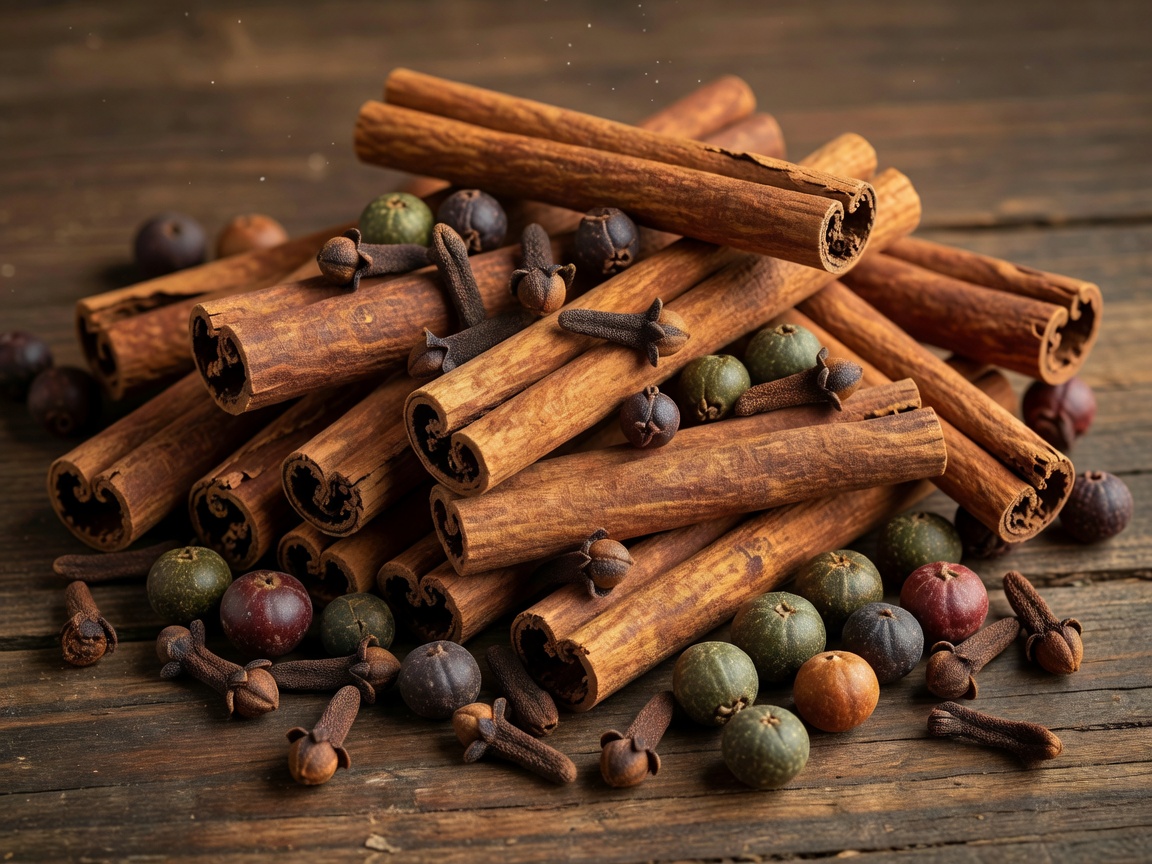
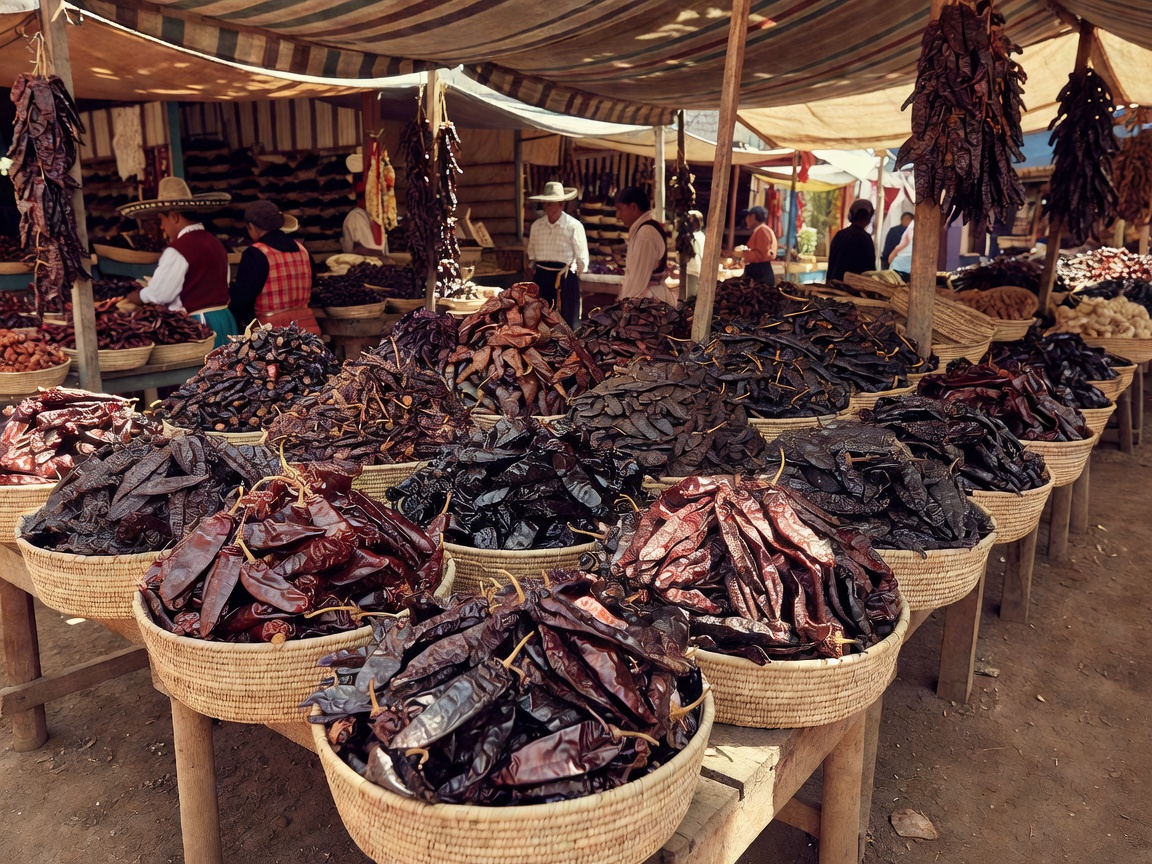
Mole Negro originated in the Central Valleys of Oaxaca, evolving from the Indigenous Zapotec mulli (sauce or concoction) documented by early chroniclers. When European and Asian spices—cinnamon, cloves, black pepper, and sesame—entered Mexico via the Manila galleons and Spanish trade, indigenous cooks masterfully combined these new aromatics with endemic Chilhuacle chiles, roasted avocado leaves, and ancestral Criollo cacao. Today, it stands as the ceremonial centerpiece for weddings, village patron festivals, and the solemn observance of Día de los Muertos.
Traditional Preparation Ritual
- Chile Charring: Dried Chilhuacle negro, Pasilla oaxaqueño, and Mulato chiles are split, deseeded, and toasted over an open wood fire on a clay comal until blackened without acrid burning.
- Ash Incorporation: Chile seeds are intentionally set alight until reduced to dark ash, quenched in water, and milled into the base to provide the distinctive obsidian coloration.
- Stone Grinding: The charred chiles, plantains, roasted tomatoes, tomatillos, raisins, almonds, Mexican chocolate, and herbs are ground together on a volcanic metate into an ultra-fine paste.
- Continuous Reduction: The paste is fried in rendered pork fat or avocado oil in a deep clay cazuela, then simmered with rich turkey broth for 12 to 24 hours.
Field Curator Tasting & Peer Reviews
“The bitterness of the toasted seeds does not overpower; it elevates the floral notes of Criollo chocolate and smoke. It is one of humanity’s most sophisticated balancing acts between sweet, umami, and smoke.”
— Dr. Helena Vasquez-Cid, Gastronomic Anthropologist (UNAM Mexico)