The Anthropological Food Guide
Delving deep into the social systems, sacred food rituals, open-air trading markets, and ancient microbial fermentation methods that sustain world culinary identity.
1. The Microbiology of Heritage Taste: Wild Fermentation
Across civilizations, taste was forged through preservation necessity. Before mechanical cooling existed, cultures created unique microbial signatures using wild yeasts, lactobacillus strains, and filamentous fungi.
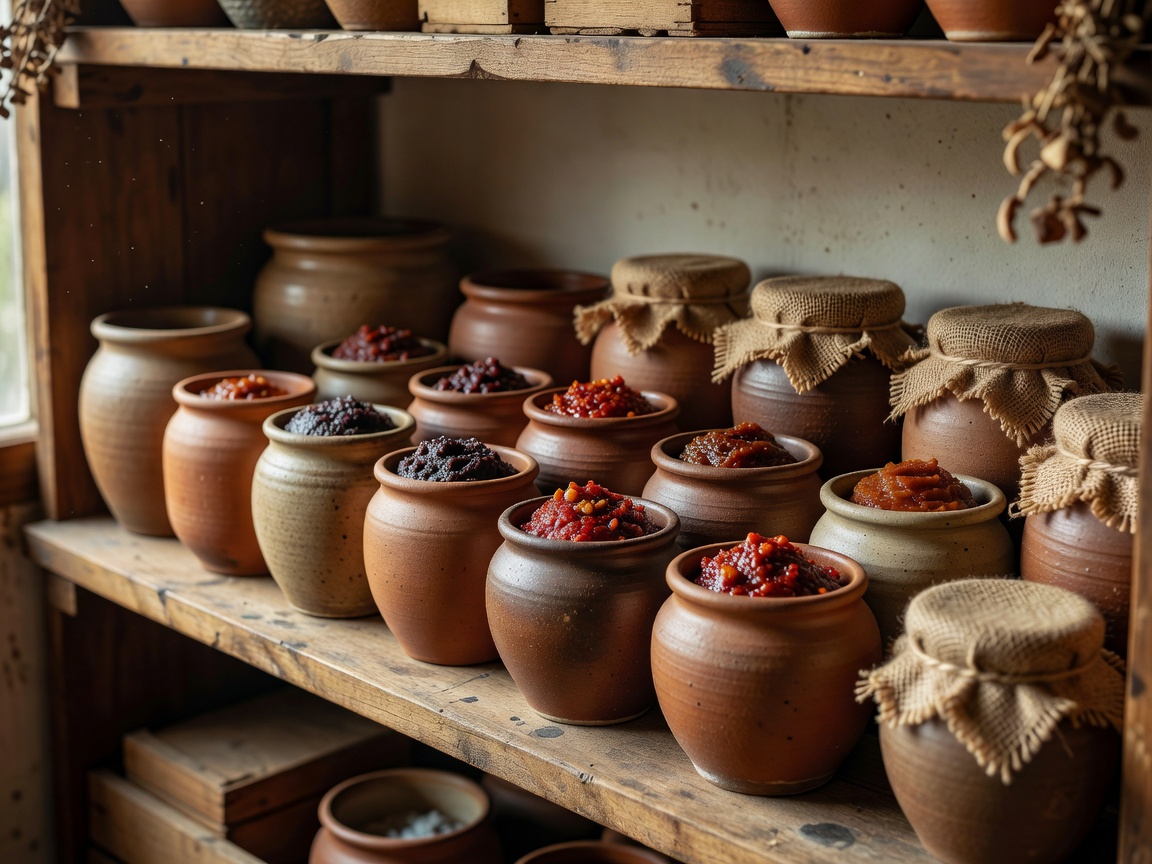 Ceramic crocks used for continuous lactic acid fermentation in East Asian households.
In Japan, Aspergillus oryzae (Kōji) converts complex starches in steamed grains into sugars and savory amino acids, yielding miso, soy sauce, and sake. In West Africa, cassava undergoes underwater microbial retting to dissipate cyanide glucosides while concentrating sour aromas into fermented fufu and gari. In Ethiopia, the sour batter of injera ferments for up to three days with wild teff yeasts, producing the signature spongy texture essential for scooping aromatic stews.
2. Dining Customs & Cross-Cultural Table Etiquette
Eating is rarely just biological nourishment; it is an enacted social contract. Navigating dining customs across continents reveals core cultural philosophies:
| Region / Culture | Core Ritual | Symbolic Meaning |
|---|---|---|
| Ethiopian Gursha | Feeding a mouthful of food wrapped in injera into the mouth of a companion with your right hand. | Demonstrates trust, communal love, and deep friendship; declining is considered an emotional rejection. |
| Japanese Itadakimasu | Clasping palms together before chopsticks, offering reverent thanks before consuming. | Honors the sacrifice of plants, animals, farmers, fishermen, and cooks who brought the meal into existence. |
| Georgian Supra & Tamada | A feast directed by a designated toastmaster (Tamada) who commands poetic, emotional toasts. | Strengthens community memory, honors ancestors, and maintains peaceful communal dialogue. |
| Bedouin Arab Coffee Ritual | Cardamom-scented Gahwa served in the Dallah; shaking the small finjan cup signals completion. | Unconditional desert hospitality where a host protects and feeds travelers before asking their business. |
3. The World's Historic Food Markets
Urban food markets serve as the beating heart of local gastronomy. They are sensory archives where heirloom seeds, wild herbs, and regional cheeses pass directly from agrarian growers to home cooks.
La Boqueria • Barcelona, Spain
Dating back to 1217 as an open meat bazaar outside the old city gates, it remains the Mediterranean benchmark for wild Pyrenean mushrooms, Iberian cured bellota hams, and fresh coastal shellfish.
Tsukiji / Toyosu • Tokyo, Japan
The global epicenter of maritime commerce, where third-generation fish merchants evaluate Pacific bluefin tuna by flashlight and supply the city's Edomae sushi masters.
Mercado 20 de Noviembre • Oaxaca, Mexico
Home of the famed Pasillo de Humo (Hall of Smoke), where tasajo, cecina, and chorizo sizzle over red oak coals accompanied by charred chiles and tlayudas.
4. Ancient Cooking Vessels & Earthenware Physics
The cooking vessel dictates how heat penetrates moisture. Long before enameled cast iron or induction ranges, clay was humanity's premier material:
- The Maghreb Tagine: The high conical lid causes rising aromatic steam to condense along the cooler upper interior and cascade back onto the meat, keeping tough cuts tender with minimal water in arid environments.
- The Georgian Kvevri: Large egg-shaped terracotta vessels coated in beeswax and buried sub-surface, fermenting grape skins, seeds, and must under naturally controlled earth temperatures for centuries.
- The Indian Tandoor: A cylindrical clay oven fired with charcoal that reaches 480°C (900°F), combining direct radiant thermal heat, convection baking, and smoking simultaneously.